Glove Leather Options: Comparing Materials for Product Development
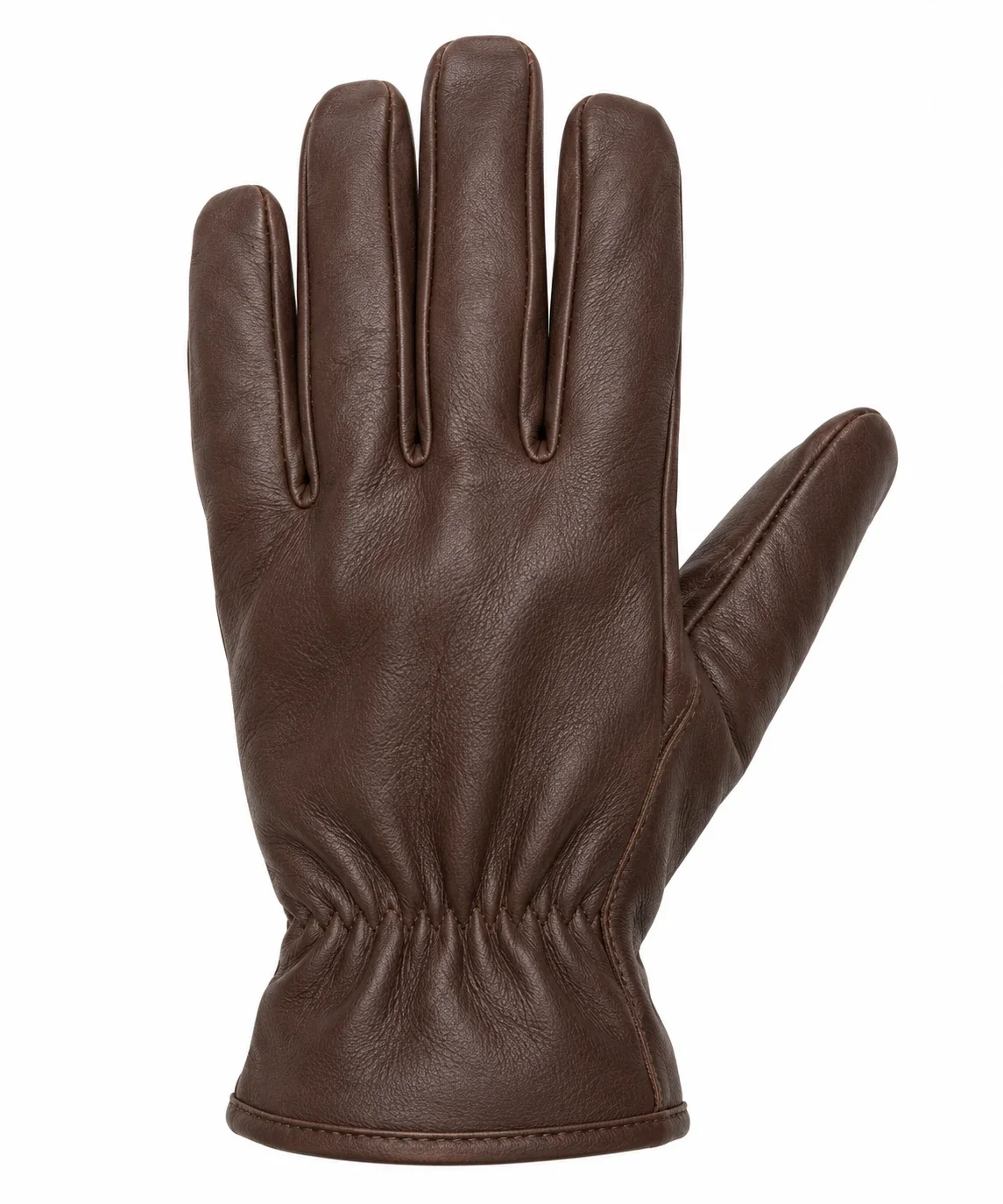
Compare glove leather proposals by asking for identifiable material descriptions and reviewing them in the intended construction. The word leather covers decisions that an image cannot resolve. Specify what needs confirmation and avoid ranking a material as universally better without reference to the glove's design and intended use.
In this guide
Ask suppliers to identify their proposals
| Material field | Buyer question |
|---|---|
| Leather identity | What material is being proposed, rather than inferred from appearance? |
| Finish | Which surface and colour reference forms the sample basis? |
| Thickness | What specification and review method are proposed? |
| Panel use | Where is this material used on palm, fingers, thumb or cuff? |
| Variation | Which appearance differences need buyer agreement? |
Separate hide-layer terms from surface terms
A material description may combine several different facts. Leather Naturally distinguishes upper-layer full-grain terminology from lower-layer split leather, while nubuck describes a buffed upper surface and suede refers to a flesh-side or split surface. Ask the supplier to identify the complete proposal rather than reading one term as a universal quality grade.
| Term in a proposal | Follow-up question |
|---|---|
| Full grain | Which declared leather, thickness and finish are proposed? |
| Split leather | Which layer and surface treatment are being supplied? |
| Nubuck or suede | What surface, substrate and sample reference define the proposal? |
Compare the leather in the actual glove pattern
Review a swatch alongside a sewn matched pair. Ask how the material proposal affects seams, fold areas and movement in the intended fit. If a different leather is offered after the pattern review, identify which decisions need rechecking rather than treating it as a purely cosmetic substitution.
Keep material selection separate from claim approval
- Record each accepted material against a supplier or buyer reference.
- Identify linings and non-leather parts separately.
- Ask what model-specific evidence supports any intended protective claim.
- Keep agreed substitution and sample-review rules in the style file.
Mistakes to avoid
- Assigning leather species, grade or thickness from an image.
- Using premium as a measurable material specification.
- Assuming material selection by itself establishes protection or tested suitability.
Prepare the next decision
Request named proposals and an agreed comparison method. Confirm the selected leather, panel locations and sample configuration before accepting the production material schedule.
For catalogue context, explore the Leather Work Gloves collection and review Gunn-Cut Full-Leather Work Glove as a catalogue design reference; confirm its documented concept/sample status before using it in a production brief. Discuss your development requirements through the manufacturing and sampling process.
Sources and further reading
Related Buyer Guides
Gloves
Leather Work Gloves: Material and Construction Questions for Buyers
When sourcing leather work gloves, confirm the material specification and pattern rather than relying on a broad leather label. A photograph does not establish the leather species, grade, thickness or any protective performance.
Read the guide : Leather Work Gloves: Material and Construction Questions for BuyersGloves
Glove Palm Materials: Comparing Leather, Synthetic and Textile Options
Compare glove palm materials within one defined glove brief rather than ranking leather, synthetic and textile as universal winners. Each description needs a more precise specification.
Read the guide : Glove Palm Materials: Comparing Leather, Synthetic and Textile OptionsGloves
Protective Glove Testing Documents: What Buyers Should Request
Request protective-glove documents against the intended product and claim, not simply a request for a certificate. The buyer needs to know which model, materials and configuration the evidence describes.
Read the guide : Protective Glove Testing Documents: What Buyers Should RequestLet’s Discuss Your Next Collection
Share your references, specifications and requested quantities. Materials, feasibility, pricing and timing are confirmed for your project.